

Laser Capture Microdissection Market Size to Reach USD 552.0 Million by 2034, Fueled by Precision Oncology & Single-Cell
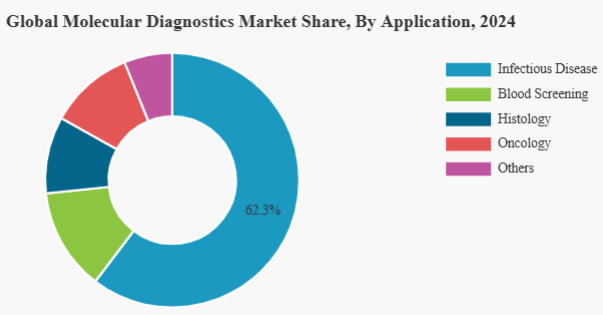
Molecular Diagnostics Market
Laser Capture Microdissection Market Size, Share & Industry Analysis By Type, By Application, By End User, and Regional Forecast, 2026-2034
Infectious Diseases are expected to drive the molecular diagnostics market growth.”
PUNE, MAHARSHTRA, INDIA, February 7, 2026 /EINPresswire.com/ -- The global Laser Capture Microdissection (LCM) Market is gaining strong momentum as life sciences and clinical research increasingly demand ultra-precise tissue analysis at cellular and subcellular levels. The market size was valued at USD 279.6 million in 2025 and is projected to grow from USD 299.9 million in 2026 to USD 552.0 million by 2034, exhibiting a robust compound annual growth rate (CAGR) of 7.9% during the forecast period. This expansion reflects the growing importance of spatial biology, molecular pathology, and targeted biomarker discovery in modern biomedical research.— Fortunebusinessinsights.com
Laser capture microdissection is a powerful technique that enables researchers and clinicians to isolate specific cells or regions from heterogeneous tissue samples under microscopic visualization. By preserving spatial context while enabling downstream genomic, transcriptomic, and proteomic analyses, LCM has become an indispensable tool in cancer research, neuroscience, developmental biology, and translational diagnostics.
Get a Free Sample Research Report: https://www.fortunebusinessinsights.com/enquiry/request-sample-pdf/laser-capture-microdissection-market-115000
Market Drivers: Precision Medicine and Advanced Molecular Analysis
One of the primary drivers of the laser capture microdissection market is the rapid advancement of precision medicine. Cancer research, in particular, requires accurate isolation of tumor cells, stromal cells, and immune infiltrates to understand tumor heterogeneity and therapy response. LCM allows researchers to extract highly specific cell populations, enabling precise molecular profiling and improving the reliability of downstream analyses.
The growing adoption of single-cell and spatial omics technologies is further accelerating market growth. While next-generation sequencing (NGS) and mass spectrometry have advanced significantly, their effectiveness depends heavily on sample purity. LCM addresses this requirement by enabling contamination-free cell selection, making it a critical upstream technology for high-resolution molecular studies.
In addition, increasing investments in biomedical research and rising funding for cancer genomics and neuroscience studies are supporting the widespread adoption of LCM systems in academic institutes, research laboratories, and biopharmaceutical companies.
Technology Advancements and Workflow Integration
Technological innovation is shaping the evolution of laser capture microdissection platforms. Modern LCM systems offer improved laser precision, faster processing speeds, and enhanced automation, reducing operator variability and improving reproducibility. Integration with digital pathology, advanced imaging software, and automated sample preparation workflows is further streamlining laboratory operations.
Manufacturers are also focusing on compatibility with formalin-fixed paraffin-embedded (FFPE) tissues, frozen samples, and live-cell preparations. This versatility broadens LCM applications across clinical research, drug discovery, and diagnostic development. Improved ergonomics, intuitive software interfaces, and reduced sample damage are making LCM systems more accessible to a wider user base.
Expanding Applications Across Research and Diagnostics
Oncology remains the largest application segment for laser capture microdissection, driven by the need to study tumor microenvironments, genetic mutations, and resistance mechanisms. LCM is widely used in biomarker discovery, companion diagnostics development, and validation of therapeutic targets.
Beyond oncology, the technology is increasingly applied in neuroscience research to study specific neuronal populations and brain regions associated with neurodegenerative diseases. Developmental biology and immunology research also benefit from LCM’s ability to isolate rare or spatially defined cell populations.
In the pharmaceutical and biotechnology sectors, LCM supports drug discovery and development by enabling precise target validation and mechanistic studies. As translational research bridges the gap between laboratory findings and clinical application, demand for LCM is expected to rise steadily.
List of Key Laser Capture Microdissection Companies Profiled
The global laser capture microdissection market is moderately consolidated, with leading players focusing on product innovation, workflow integration, and global expansion. Key companies profiled in the market include:
Thermo Fisher Scientific Inc. (U.S.) – A leading provider of advanced LCM systems integrated with molecular analysis platforms.
Targeted Bioscience (U.S.) – Specializes in precision microdissection technologies for research applications.
Laxco, Inc. (U.S.) – Offers microscopy and imaging solutions supporting microdissection workflows.
Carl Zeiss AG (Germany) – A key player in high-resolution microscopy and laser-based imaging technologies.
Molecular Machines and Industries GmbH (Germany) – Known for automated LCM platforms with high precision and throughput.
Danaher Corporation (U.S.) – Operates multiple brands supporting microdissection and molecular pathology.
Standard BioTools Inc. (U.S.) – Provides advanced tools for high-dimensional biological analysis.
CaresBio Laboratory (U.S.) – Offers specialized laboratory services supporting microdissection-based studies.
AnaPath Services GmbH (Germany) – Provides pathology and tissue-based research services.
Creative Bioarray (U.S.) – Supports genomics and tissue analysis applications, including LCM-based research.
Buy This Repports Now: https://www.fortunebusinessinsights.com/select-license/115000
REPORT COVERAGE
The laser capture microdissection market report provides a comprehensive global analysis, focusing on key aspects such as leading companies, technology type, application areas, and end users. The report offers in-depth insights into market growth trends, competitive dynamics, and key industry developments shaping the sector. Additionally, it examines the technological and research factors that have contributed to the rapid advancement and adoption of laser capture microdissection over recent years.
Regional Outlook and Growth Prospects
North America currently dominates the laser capture microdissection market due to strong research funding, advanced laboratory infrastructure, and high adoption of precision medicine technologies. The United States remains a major hub for cancer genomics and translational research, supporting sustained demand for LCM systems.
Europe represents a significant market, driven by robust academic research, strong pathology networks, and increasing investments in molecular diagnostics. Asia Pacific is expected to witness the fastest growth over the forecast period, supported by expanding biotechnology sectors, rising research expenditure, and growing focus on personalized medicine in countries such as China, Japan, and India.
Future Outlook
The global laser capture microdissection market is poised for strong growth through 2034, driven by advances in spatial biology, precision oncology, and integrated molecular workflows. As researchers seek deeper insights into cellular heterogeneity and disease mechanisms, LCM will remain a foundational technology enabling high-resolution biological discovery. With the market projected to reach USD 552.0 million by 2034, laser capture microdissection is set to play a critical role in the future of life sciences and clinical research.
Ashwin Arora
Fortune Business Insights™ Pvt. Ltd.
+1 833-909-2966
sales@fortunebusinessinsights.com
Legal Disclaimer:
EIN Presswire provides this news content "as is" without warranty of any kind. We do not accept any responsibility or liability for the accuracy, content, images, videos, licenses, completeness, legality, or reliability of the information contained in this article. If you have any complaints or copyright issues related to this article, kindly contact the author above.
