

Cold Plasma Market to Reach $498.0 Million by 2034, Driven by Medical Innovation & Expanding Sterilization Applications
Cold Plasma Market
Cold Plasma Market Size, Share & Industry Analysis, By Product Type, By Technology, By Application, By End-User, and Regional Forecast, 2026-2034
Rising Focus on Infection Prevention and Improved Patient Outcomes to Accelerate Market Growth ”
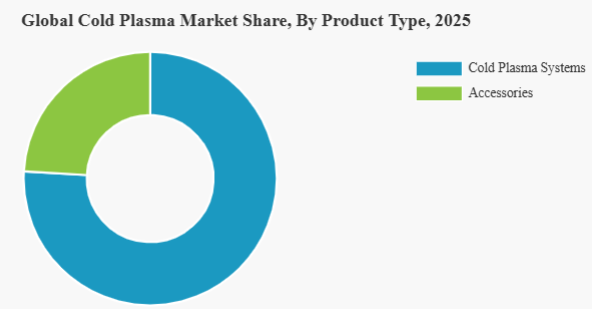
PUNE, MAHARSHTRA, INDIA, February 7, 2026 /EINPresswire.com/ -- The global Cold Plasma Market is gaining rapid traction as industries increasingly adopt non-thermal plasma technologies for medical, healthcare, and industrial applications. The market size was valued at USD 161.7 million in 2025 and is projected to grow from USD 182.8 million in 2026 to USD 498.0 million by 2034, exhibiting a strong compound annual growth rate (CAGR) of 13.3% during the forecast period. This accelerated growth reflects rising demand for advanced, chemical-free solutions in wound care, infection control, surface treatment, and sterilization.— Fortunebusinessinsights.com
Cold plasma also referred to as non-thermal plasma—is a partially ionized gas that operates at near-room temperature, enabling its safe use on heat-sensitive materials and living tissues. Unlike conventional thermal plasma, cold plasma can inactivate bacteria, viruses, and fungi without causing tissue damage, making it highly suitable for healthcare and biomedical applications. Its versatility and effectiveness are positioning cold plasma as a next-generation technology across multiple end-use sectors.
Get a Free Sample Research Report: https://www.fortunebusinessinsights.com/enquiry/request-sample-pdf/cold-plasma-market-114745
Market Drivers: Healthcare Innovation and Infection Control Needs
One of the primary drivers of the cold plasma market is the growing demand for advanced wound care and infection control solutions. Chronic wounds, surgical site infections, and antimicrobial-resistant pathogens present major challenges for healthcare systems worldwide. Cold plasma therapies offer a promising alternative by promoting wound healing, reducing microbial load, and minimizing reliance on antibiotics.
Hospitals and outpatient clinics are increasingly exploring cold plasma for dermatology, dentistry, and wound management applications. The technology’s ability to accelerate tissue regeneration while maintaining antimicrobial efficacy has attracted attention from clinicians seeking innovative, patient-friendly treatment modalities.
Beyond healthcare, cold plasma is gaining adoption in industrial sterilization, packaging, and surface modification. Food processing and packaging companies are using cold plasma to extend shelf life and enhance food safety without chemical preservatives. In electronics and materials science, cold plasma enables precise surface activation and cleaning, supporting high-performance manufacturing processes.
Technological Advancements and Expanding Applications
Continuous technological advancements are expanding the scope of cold plasma applications. Manufacturers are developing compact, portable devices that allow point-of-care usage in hospitals and clinics. Improved control over plasma parameters such as intensity, exposure time, and gas composition is enhancing treatment consistency and safety.
Research institutions and technology providers are also investigating the integration of cold plasma with other therapeutic approaches, including advanced wound dressings and regenerative medicine techniques. These innovations are expected to unlock new clinical indications and accelerate commercialization across global markets.
MARKET CHALLENGES
Despite its strong growth potential, the cold plasma market faces notable challenges related to reimbursement variability and operational integration complexity. Healthcare adoption remains moderated by uncertainty around reimbursement policies and the need for workflow alignment across clinical teams. Cold plasma treatments often require repeated sessions, making reimbursement models and clinical scheduling central to economic feasibility.
In the absence of standardized clinical pathways, treatment protocols may vary significantly between practitioners, slowing institutional adoption. Additionally, training requirements extend beyond physicians to include nurses, wound-care specialists, and outpatient clinic staff. These factors can increase implementation costs and delay large-scale deployment, particularly in resource-constrained healthcare settings.
LIST OF KEY COLD PLASMA COMPANIES PROFILED
The global cold plasma market is moderately fragmented, with specialized technology providers and industrial solution companies driving innovation and commercialization. Key companies profiled in the market include:
terraplasma medical GmbH (Germany) – A pioneer in medical cold plasma devices for wound care and dermatological applications.
ADTEC Plasma Technology Co., Ltd. (Japan) – Develops plasma systems for industrial, medical, and research applications.
Relyon Plasma GmbH (Germany) – Focuses on atmospheric plasma solutions for healthcare and surface treatment.
Neoplas Tools GmbH (Germany) – Specializes in cold plasma tools for medical and laboratory use.
PlasmaMed GmbH (Germany) – Develops certified cold plasma systems for clinical applications.
Noxilizer, Inc. (U.S.) – Provides non-thermal sterilization technologies for medical devices.
Enercon Industries Corporation (U.S.) – Offers plasma and surface activation solutions for industrial manufacturing.
TOMI Environmental Solutions, Inc. (U.S.) – Focuses on disinfection and decontamination technologies, including plasma-based solutions.
Apyx Medical Corporation (U.S.) – Develops plasma-based technologies for surgical and aesthetic applications.
Europlasma NV (Belgium) – Provides plasma solutions for environmental, industrial, and healthcare use cases.
Buy This Report : https://www.fortunebusinessinsights.com/select-license/114745
Regional Outlook and Growth Opportunities
Europe currently holds a significant share of the cold plasma market, driven by strong research activity, early clinical adoption, and supportive regulatory frameworks in countries such as Germany and France. North America follows closely, supported by advanced healthcare infrastructure, rising awareness of antimicrobial resistance, and increasing investments in innovative medical technologies.
Asia Pacific is expected to witness the fastest growth during the forecast period. Expanding healthcare access, rising industrial manufacturing activity, and growing interest in non-chemical sterilization solutions in countries such as Japan, China, and South Korea are driving regional market expansion.
Future Outlook
The global cold plasma market is poised for rapid expansion through 2034, supported by growing clinical evidence, technological innovation, and expanding applications across healthcare and industry. While reimbursement and integration challenges remain, continued standardization, training, and regulatory clarity are expected to improve adoption rates. With the market projected to reach USD 498.0 million by 2034, cold plasma technology is set to play an increasingly important role in the future of medical treatment, sterilization, and advanced material processing.
Ashwin Arora
Fortune Business Insights™ Pvt. Ltd.
+1 833-909-2966
email us here
Legal Disclaimer:
EIN Presswire provides this news content "as is" without warranty of any kind. We do not accept any responsibility or liability for the accuracy, content, images, videos, licenses, completeness, legality, or reliability of the information contained in this article. If you have any complaints or copyright issues related to this article, kindly contact the author above.
