

Bhaskar Chakravorti on The Indianness Podcast with Host Sanjay: A Journey of Ideas, Identity, and Impact

Indianness Podcast
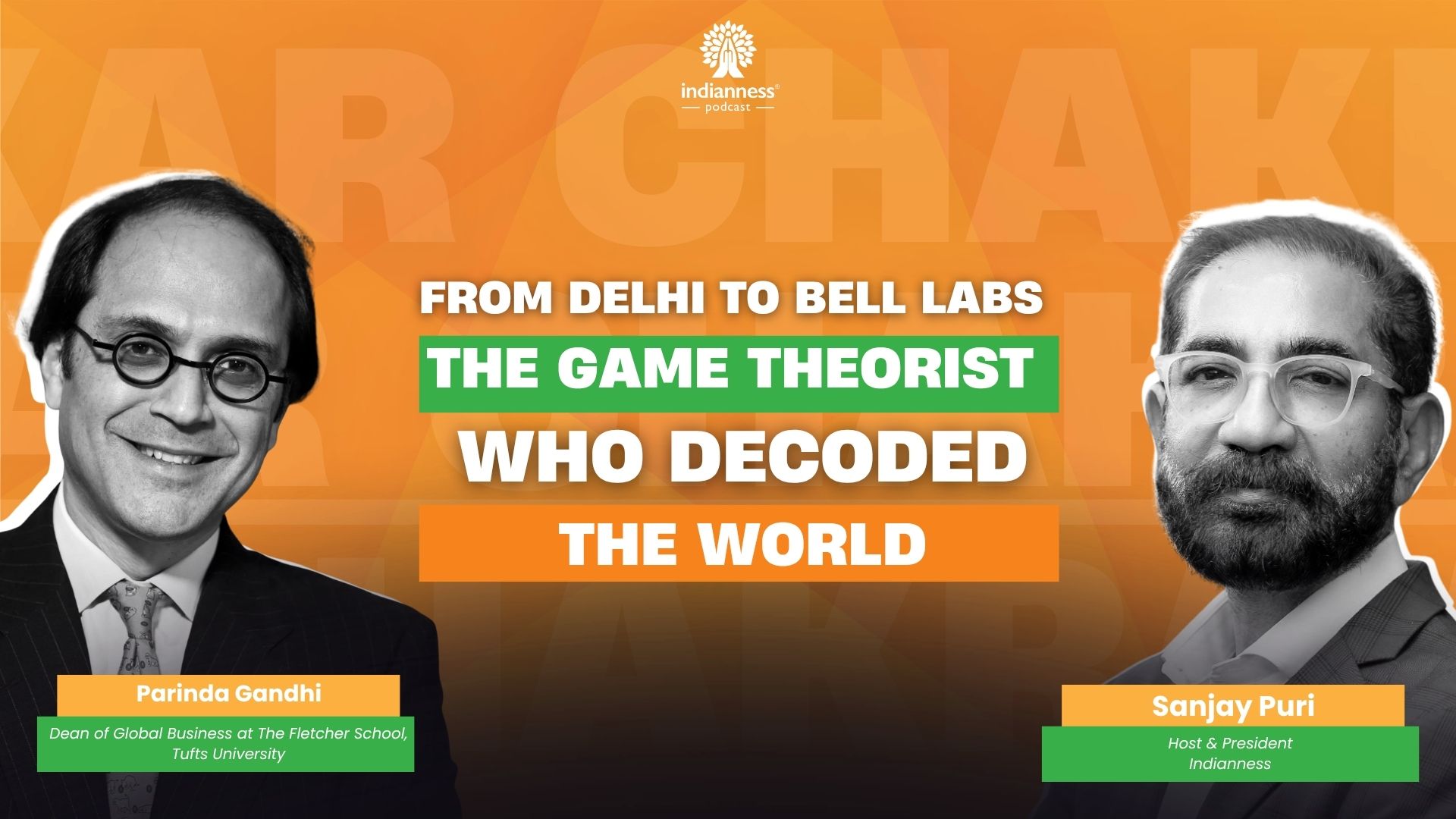
Bhaskar Chakravorti, Dean of Global Business at The Fletcher School at Tufts University, with Sanjay Puri, President of Indianness
On The Indianness Podcast, Bhaskar Chakravorti shares his journey, blending theory and real-world insight to show how identity, context, and ideas shape impact.
Chakravorti describes his upbringing as deeply influenced by his father, an academic and storyteller who shaped his intellectual curiosity. Growing up in a Bengali household in Delhi, he was exposed to history, literature, and policy thinking from an early age. His education at St. Stephen’s College became a major inflection point, not just because of academic rigor but due to the people he met there. The environment encouraged debate, creativity, and independence, helping him develop his own voice beyond his family’s influence.
Another turning point came during his work in game theory and his time at Bell Labs. There, he realized that abstract mathematical ideas could solve real-world problems. His involvement in designing auction systems for wireless spectrum showed how theory could shape global industries. This shift led him into consulting, where he worked with organizations like McKinsey and engaged with policymakers worldwide. He learned that data and logic alone are not enough and that culture, politics, and human behavior often drive decisions.
One powerful example he shared was his experience in South Africa during the post-apartheid period. While advising on internet infrastructure, he expected economic logic to guide decisions. Instead, he found that political relationships and historical context shaped outcomes. This “Mandela moment” taught him that effective decision-making requires both analytical thinking and contextual understanding. It reinforced his belief that real impact comes from combining theory with empathy and awareness.
Throughout the conversation, Chakravorti also reflects on mentorship and personal growth. He explains that mentors can come in many forms, from parents and teachers to colleagues and even life experiences. He emphasizes the importance of curiosity and openness in learning. As a parent, he highlights simple habits like reading with children as meaningful ways to guide and inspire others. These insights make the discussion relatable and practical for listeners seeking direction in their own journeys.
The discussion on The Indianness Podcast with host Sanjay Puri ultimately presents a story about identity and adaptability. Chakravorti defines “Indianness” as the ability to navigate without rigid boundaries, drawing solutions from diverse influences. His journey shows how embracing complexity and uncertainty can lead to innovation and impact. By connecting personal history with global challenges, he offers a powerful example of how individuals can bridge worlds and create meaningful change in an interconnected world.
In addition, the episode highlights how nonlinear careers can still create coherent meaning. Chakravorti moved across sectors, including academia, corporate strategy, and public policy, yet maintained a consistent focus on solving complex problems. His story challenges the idea that success requires a fixed path. Instead, it suggests that adaptability and reflection are more important than rigid planning. This perspective makes the conversation especially valuable for young professionals navigating uncertain futures today.
Upasana Das
Knowledge Networks
email us here
Visit us on social media:
LinkedIn
Instagram
Facebook
YouTube
X
Legal Disclaimer:
EIN Presswire provides this news content "as is" without warranty of any kind. We do not accept any responsibility or liability for the accuracy, content, images, videos, licenses, completeness, legality, or reliability of the information contained in this article. If you have any complaints or copyright issues related to this article, kindly contact the author above.
