

Bringing you the latest news on media and advertising
Provided by AGP
8B Co-Founder Bogdan Zadorozhny: Central Bank QR Interoperability Is the Defining Fintech Trend of the Decade
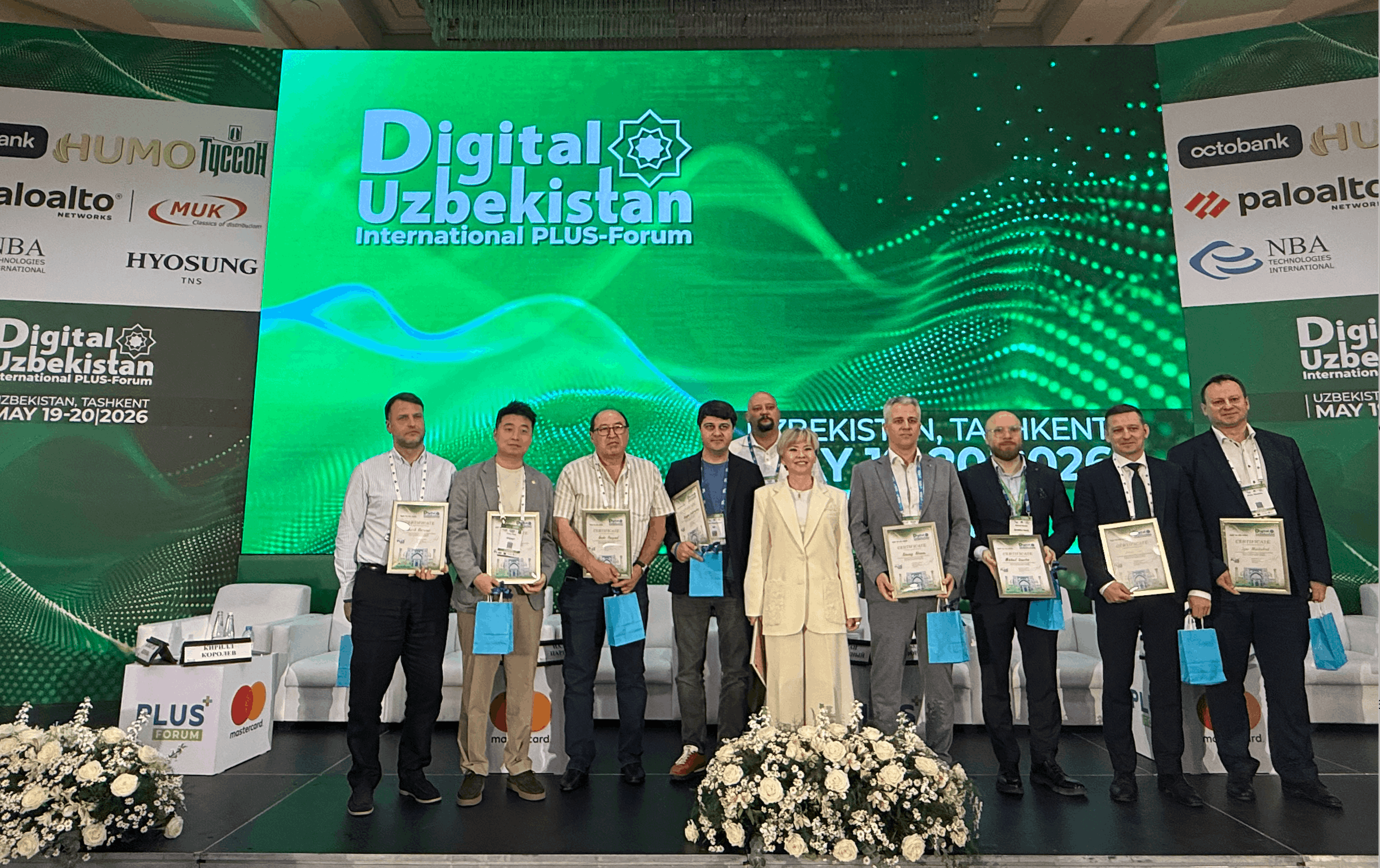
Plus Forum 2026
The discussion moved from cross-border payment rails to AI orchestration, from data governance to organizational culture, and ended on a question that reframed the entire panel: are people ready to trust the technology with real decisions.
Bogdan Zadorozhny, Co-Founder and Chief Innovation Officer of 8B, presented the most architectural view of where global payments are heading. On screen: maps of ASEAN, national QR systems, cross-border interoperability frameworks, and the new generation of account-to-account rails.
"The unified QR of central banks is the main fintech trend of the decade," Zadorozhny said.
The economics were stark. Card network fees sit in the 3 to 3.5 percent range. National QR models operate at 0.3 to 0.8 percent. Cost, he argued, is no longer the decisive variable. The deeper question is ownership: who controls the infrastructure, who controls the routing logic, who controls the direction of payment flows.
Zadorozhny also pointed to the next phase of the financial system, in which AI agents independently orchestrate payments, liquidity, and cross-border scenarios. "AI is gradually becoming the execution layer of the financial system," he said.
His thesis sat at the center of the broader discussion. Other speakers approached the same architecture from different angles.
E-commerce as financial infrastructure
Kirill Korolev, Director of Strategic Fintech Development for Central and Middle Asia at Wildberries, opened the panel. "E-commerce stopped being only about trade a long time ago. Financial services are becoming part of the customer journey," he said. His broader point: Central Asia is no longer a region of late adoption. It is developing its own logic and its own user patterns.
Cross-border payments as trust infrastructure
Anton Chen, Head of Business Development for Alipay+ across the CIS, delivered one of the strategically strongest segments. "Cross-border payments today are no longer just about moving money. They are infrastructure for trust between ecosystems," Chen said. Finance is becoming an invisible layer inside digital behavior.
Digital trust as state infrastructure
Nadir Parpiev, Head of the Service for the Development of Electronic Digital Signature Key Registration Centers at the Ministry of Digital Technologies of the Republic of Uzbekistan, brought the discussion to the foundation everything else rests on. "A cross-border space of trust is the next stage of digital development for states," he said. Digital economies do not begin with interfaces. They begin with trust.
The operational reality of banks
Alexey Afonin, Vice President of Development at U-BSS, walked through how AI is becoming a new operational layer for banks: agentic AI, explainable AI, empathic AI, voice assistants, orchestration. "AI should control the entire customer journey, before, during, and after interaction," he said.
Mikhail Danilin, Head of Digital Corporate at IpotekaBank OTP Group, answered from the position of a bank processing a constant load of routine operations. "If AI can take over routine work, account statements, standard requests, repetitive processes, then it should." This is no longer digitalization for efficiency. This is an attempt to save the operational model of banks.
RegTech and global capital
Alexey Karnaukhov, former Chief Data Officer at IpotekaBank OTP Group, turned the conversation to data governance and the new transparency demands of regulators. From the eight pillars he outlined came a new metric: the Reporting Data Readiness Index, or RDRI. "Data governance is becoming the operational model for managing regulatory data," he said.
Denis Tur, CEO of STRATTURA Consulting, carried the scale of the shift in numbers. $344.7 billion in private AI investment. $581.7 billion in corporate AI investment. $2.52 trillion in projected AI spending. "Roughly 80 percent of global and venture investment today is tied to AI," Tur said. This is no longer a technology trend. It is a restructuring of the global economy.
The cultural floor
The most striking moment came from Igor Mushakov, an independent expert who pulled the conversation back from technology to people. "I do not trust processes," he said. His point was about culture, not infrastructure: legacy systems, shadow IT, vendor lock-in, manual processes are real, but "data will not help if there is no culture inside the company."
His question to the audience defined the panel: "Would you have eye surgery if it were performed by an AI?" The room laughed first. Then went quiet.
Mushakov closed with the sharpest formulation of the day: "First relationships. Then teams. Then processes. And only then AI."
The closing frame
Izimova closed with a clean structural model: strategy, operating model, culture. "Digital transformation delivers maximum return only when strategy, operating model, and culture are synchronized," she said. Roughly two thirds of companies do not see measurable results from digital transformation, and the reasons are entirely human: no leadership alignment, no ownership, no change management, poor data quality.
The defining theme of the panel was not AI. Central Asia is starting to build its own digital philosophy. Not a copy of Silicon Valley. Not a tracing of Chinese super-app ecosystems. A separate model in which state digital infrastructure, cross-border QR rails, AI orchestration, RegTech, and a very human question of trust all coexist.
The defining question of digital transformation in 2026 is no longer about technology. It is about whether people are ready to trust it.
Daria Kashurina
8B
+34 698 99 36 38
email us here
Legal Disclaimer:
EIN Presswire provides this news content "as is" without warranty of any kind. We do not accept any responsibility or liability for the accuracy, content, images, videos, licenses, completeness, legality, or reliability of the information contained in this article. If you have any complaints or copyright issues related to this article, kindly contact the author above.
