

Liuhe Chemicals:TCCA for Rainwater Cistern Disinfection: Dosage, Chlorine Residual and Performance
News originally published by
EIN Presswire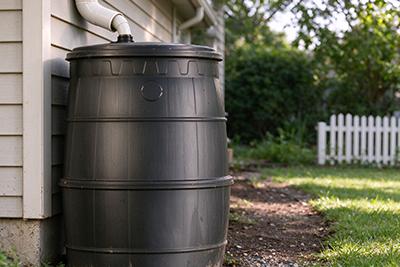
TCCA releases available chlorine when it dissolves in water. The resulting chlorine species, particularly hypochlorous acid (HOCl), play a major role in microbial inactivation by interfering with essential cellular processes.
For stored rainwater, disinfection involves two related objectives: reducing microorganisms already present in the water and maintaining an adequate chlorine residual to help control subsequent microbial contamination.
TCCA performance depends on more than the amount initially added. Organic matter and other reactive substances consume chlorine, while temperature and pH influence both chlorine chemistry and disinfection efficiency. Ammonia can also react with chlorine to form chloramines, changing the rate of microbial inactivation.
Understanding these factors helps you evaluate TCCA dosage, residual chlorine, and treatment intervals under different storage conditions.
TCCA disinfection of a rainwater storage cistern, releasing available chlorine to control bacteria in stored water
How Long Does Chlorine Residual Last After TCCA Treatment?
Chlorine residual does not reach its peak immediately after TCCA is added to water. In a 2019 experiment on rainwater cistern disinfection, the residual chlorine level gradually increased during the first few hours, reaching its highest point at around three hours before starting to decline.
The rate of chlorine loss depends on the water quality, temperature, pH, and initial TCCA dosage. Organic matter and other substances in stored water can consume chlorine, while higher temperatures generally accelerate chlorine loss. This means the same amount of TCCA may not provide the same lasting effect in different water storage systems.
For practical use, there is no single time interval that applies to every rainwater cistern. Regularly testing residual chlorine is a more reliable way to assess ongoing disinfection than estimating it from the initial dosage alone. Treatment frequency should be adjusted according to the water conditions, monitoring results, and applicable water-quality requirements.
What Factors Affect TCCA Chlorine Residual and Disinfection Efficiency?
1. Organic Matter and Other Reactive Substances
Chlorine reacts with organic matter and other substances in water. When more of these substances are present, more chlorine may be consumed, leaving less residual chlorine available for continued disinfection.
In the cistern-water experiment, the initial available chlorine dose was 2.5 mg/L. After 153 hours, the chlorine residual had decreased by 1.65 mg/L in the original water, compared with 1.20 mg/L in water diluted fivefold and 0.79 mg/L in pure water. Water diluted twofold showed a slower chlorine loss than the original water as well.
✕
Original Water
Highest chlorine demand: residual dropped 1.65 mg/L over 153 h.
✓
Diluted / Pure Water
Lower demand: 1.20 mg/L (5× diluted) and 0.79 mg/L (pure) over the same period.
These results show that water quality can have a significant effect on how long chlorine remains in the water. Rainwater containing more organic matter and other reactive substances may consume chlorine more quickly, so treatment requirements should be assessed according to the actual water conditions rather than dosage alone.
2. Water Temperature
Water temperature affects both chlorine stability and the speed of bacterial inactivation. In general, warmer water can cause chlorine residual to decrease more quickly, while also helping chlorine inactivate bacteria faster under the tested conditions.
The results at different temperatures were as follows:
Water Temperature Residual Chlorine Decrease After 142 h Residual Chlorine Level After 142 h
10 °C 69% 0.78 mg/L
30 °C 83% 0.42 mg/L
For practical cistern management, this means that temperature can influence both initial disinfection and how long residual chlorine remains. Water in warmer conditions may require closer monitoring to determine whether the residual is being maintained adequately.
3. Water pH
Water pH affects how chlorine exists in water and how effectively it disinfects. Under typical water-treatment conditions, hypochlorous acid (HOCl) is generally more effective at inactivating microorganisms than hypochlorite ions (OCl⁻). A higher pH shifts the balance toward hypochlorite ions, which can reduce disinfection efficiency.
At an initial available chlorine dose of 2.5 mg/L, the experiment found that chlorine residual decreased more slowly at higher pH levels. After five minutes of contact, the bacterial inactivation rate was 94.6% at pH 6, compared with 85.2% at pH 9. These effects apply to trichloroisocyanuric acid treatment in stored water generally, not only to the specific sample tested.
Bacterial Inactivation Rate at 5 Minutes Contact
pH 6
94.6%
pH 9
85.2%
Same initial dose (2.5 mg/L). Higher pH shifts chlorine toward less effective hypochlorite ions (OCl⁻).
These results demonstrate that pH can affect disinfection performance even when the initial chlorine dose is the same. However, changing pH should not be treated as a standalone solution. Any adjustment needs to consider the source-water quality, chemical compatibility, and applicable water-quality requirements.
4. Ammonia Concentration
Ammonia reacts with chlorine to form chloramines. These compounds can also provide disinfection, but they generally act more slowly than free chlorine. As a result, ammonia in stored water can reduce the speed of bacterial inactivation.
In the experiment, the initial available chlorine dose was 2.5 mg/L. In the original water, the bacterial inactivation rate exceeded 99% after 15 minutes. When the ammonia concentration reached 2.04 mg/L, the rate was only 88.5% after 15 minutes and 93.3% after 60 minutes.
Ammonia slows disinfection
The same TCCA dosage may produce different results in water with different ammonia concentrations. Dose and contact time should be determined according to actual water conditions rather than assumed to be universally effective.
This difference highlights the importance of checking water quality before selecting a disinfection approach. The same TCCA dosage may produce different results in water with different ammonia concentrations, so dosage and contact time should be determined according to the actual conditions rather than assumed to be universally effective.
What TCCA Dosage Is Effective for Rainwater Cistern Disinfection?
The study evaluated theoretical available chlorine doses of 1.5, 2.0, 2.5, and 3.0 mg/L at 20 °C.
Under the tested conditions, doses of 1.5–2.5 mg/L achieved approximately 99.0% bacterial inactivation within 60 minutes. At doses above 2.5 mg/L, the reported inactivation rate reached 99.9% within 30 minutes.
1.5–2.5 mg/L
≈ 99.0%
Bacterial inactivation within 60 minutes
> 2.5 mg/L
99.9%
Bacterial inactivation within 30 minutes
The researchers discussed 2.5 mg/L as a practical initial theoretical available chlorine dose for the particular cistern water examined. For TCCA dosage planning in other water sources, the same logic applies: start from a measured baseline, then verify with residual testing. Their model also estimated how long it would take for the residual to decline to 0.05 mg/L.
Estimated Days for Residual Chlorine to Decline to 0.05 mg/L
10 °C
15 °C
20 °C
Suggested (2.5 mg/L)
0
10
20
30
Days
1.5 mg/L
2.0 mg/L
2.5 mg/L
Suggested
3.0 mg/L
Model estimates for the study's cistern water. The paper suggested a 25-day replenishment interval at 2.5 mg/L for the conditions studied.
Based on the model estimates and considerations such as taste and chemical consumption, the paper suggested a replenishment interval of 25 days at an initial dose of 2.5 mg/L for the conditions studied.
These values should be interpreted as study-specific estimates, not universal dosage instructions. The original experiments used a particular rainwater sample with defined pH, organic matter, ammonia, and microbial characteristics. Actual chlorine demand and residual persistence can differ substantially between water sources.
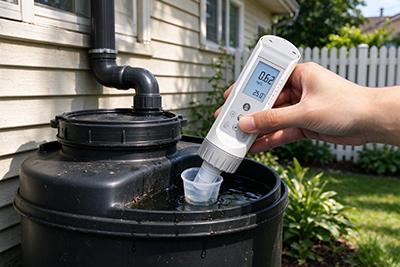
Testing residual chlorine and microbiological parameters to verify TCCA dosage in a rainwater cistern
In addition, the theoretical available chlorine dose is not the same as the mass of commercial TCCA product required. Product dosage depends on its measured available chlorine content, dissolution behavior, and the chlorine demand of the water. Treatment should be verified through residual chlorine and microbiological testing, with all dosing decisions made in accordance with applicable drinking-water regulations.
Conclusion
Effective rainwater cistern disinfection requires more than selecting a disinfectant and setting a dosage. Water quality can change during storage, and treatment decisions need to account for the condition of the water source, storage environment, monitoring results, and intended use. For operators managing decentralized water supplies, a practical approach is to establish a treatment procedure based on initial water-quality testing, verify disinfection performance, and adjust the operating schedule according to measured chlorine residuals and applicable drinking-water requirements. Product specifications, dosing accuracy, safe handling, and consistent supply also contribute to reliable treatment management. TCCA can be considered within this broader approach, provided that the selected product is suitable for the intended application and the treated water meets the relevant safety standards.
Hebei Liuhe Chemicals Co., Ltd
Hebei Liuhe Chemicals Co., Ltd
+ +86 17832290695
sales@hbliuhechem.com
Legal Disclaimer:
EIN Presswire provides this news content "as is" without warranty of any kind. We do not accept any responsibility or liability for the accuracy, content, images, videos, licenses, completeness, legality, or reliability of the information contained in this article. If you have any complaints or copyright issues related to this article, kindly contact the author above.
